

A Culinary Journey in Cusco: Authentic Traditional Dishes and Curated Local Dining
Traditional food in Cusco is high-Andean cooking built on native potatoes, maize, cuy (guinea pig), dried meats, and fermented chicha de jora, and it is distinct from Peru’s coastal ceviche culture. Plan your meals around cuy al horno, chiri uchu, adobo, chairo, and kapchi. Eat cuy where it is wood-fired, book one Novoandina tasting menu for a curated night, and follow CDC food and water precautions at markets.
Most travelers arrive in Cusco for Machu Picchu and leave having eaten the same lomo saltado they could have ordered in Lima. That isn’t for lack of options. The traditional version of Cusco’s food and the tourist version often sit a few blocks apart, and nothing on a menu tells you which one you’re looking at.
This guide covers what to eat, where the traditional versions are served, how to tell a tourist adaptation from the real thing, and the practical side: eating safely at 3,400 meters, what meals cost, and when you’re expected to tip. It’s written from Cusco by the FindersPeru team.
Key Takeaways
- Cusco cooks at altitude: freeze-dried potatoes (chuño), dried meat (charqui), cuy and chicha de jora define it, not seafood.
- Chiri uchu is the city’s festival dish, recognized by the Andean Parliament as cultural heritage of the Andean region in July 2024.
- For authentic cuy al horno, eat it where it is wood-fired: in Tipón on the city’s outskirts or in a quinta-style restaurant.
- Peru has no Michelin-starred restaurants. The Cusco region’s top-ranked restaurant, Mil, placed No. 49 on Latin America’s 50 Best Restaurants 2025.
- Don’t drink Cusco’s tap water. Choose food cooked hot and served fresh, especially at markets.
- Restaurants may add a disclosed service charge of up to 13%. If it’s on the bill, an extra tip is optional.
What Makes Traditional Food in Cusco Different From the Rest of Peru?
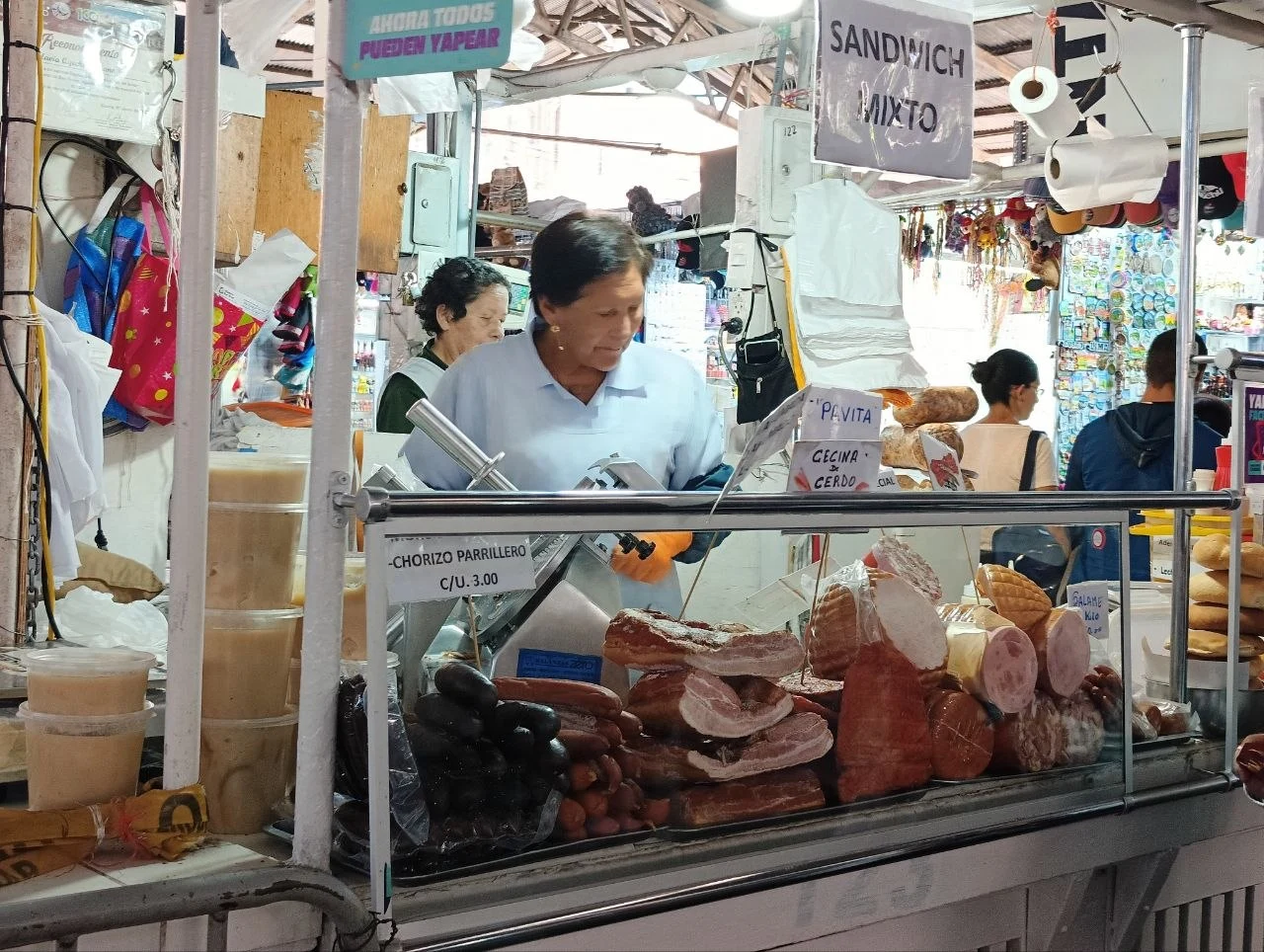
Peru’s best-known dishes, like ceviche, lomo saltado, and causa limeña, come from the coast or from pan-Peruvian cooking. Cusco’s kitchen developed high in the Andes, around what could be grown, preserved, and carried: native potatoes freeze-dried into chuño and moraya, dried alpaca or beef called charqui, maize fermented into chicha de jora, and cuy raised inside household kitchens.
That last ingredient goes back further than most travelers expect. Zooarchaeological evidence places the domestication of the guinea pig in the central Andes between roughly 5000 and 4000 BC. Cuy was never everyday meat; it was a feast dish, served whole at weddings, roof-raisings, and harvest celebrations.
Cusco treats the places where this food is cooked as heritage too. In 2015, Peru’s Ministry of Culture declared the picanterías and chicherías of Cusco part of the National Cultural Heritage, recognizing the eateries themselves, their cooking techniques, and how recipes pass between generations.
You can even see Cusco’s food history inside its cathedral. In the Last Supper painted in 1753 by Quechua artist Marcos Zapata, the platter in front of Christ holds a roasted cuy, and the table carries chicha instead of wine.
What to Eat in Cusco: 7 Traditional Dishes Worth Planning Around
These dishes are rooted in Cusco itself rather than borrowed from the coast. Order at least three during your stay.
Cuy al Horno (Oven-Roasted Guinea Pig)
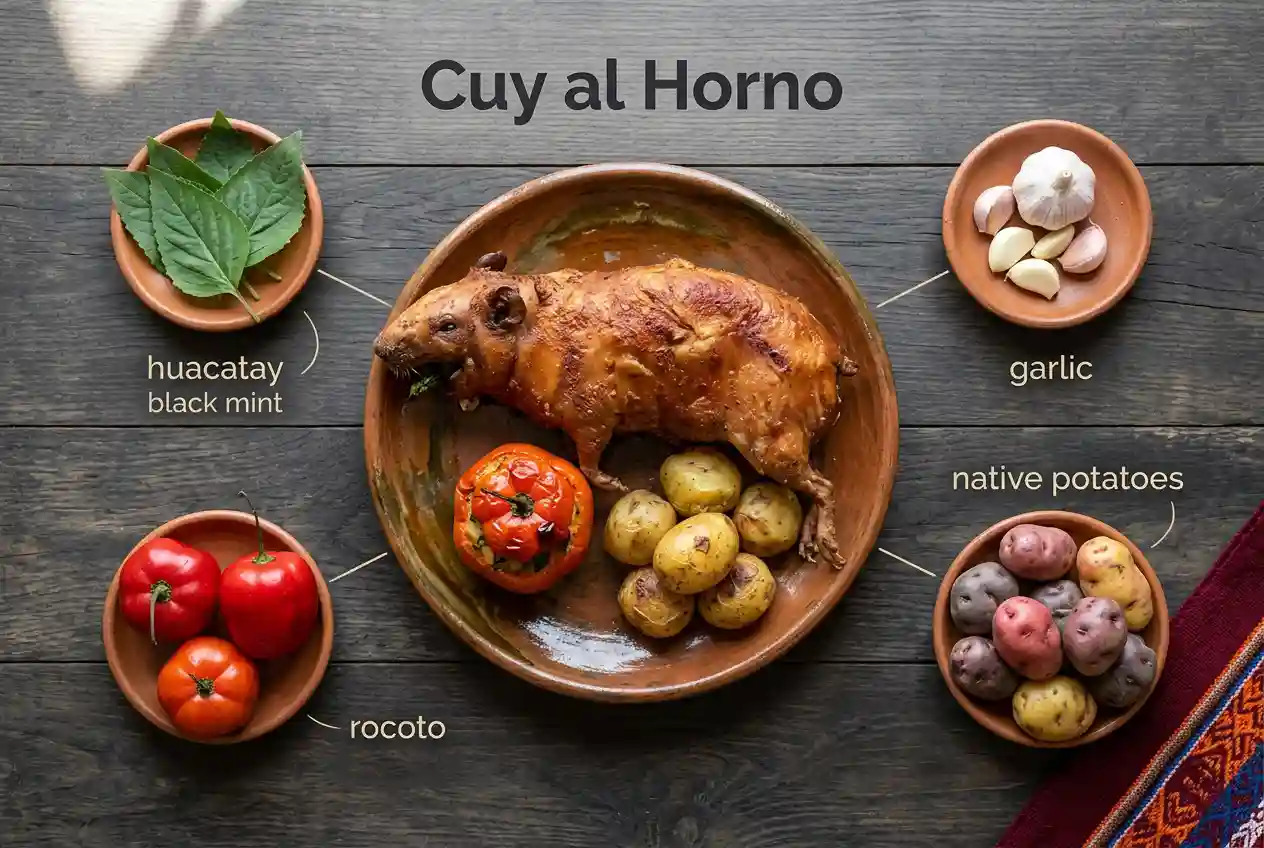
Cusco’s signature preparation stuffs the whole cuy with huacatay (black mint) and garlic, then slow-roasts it in a wood-fired clay or brick oven. It is different from Arequipa’s cuy chactado, which is flattened under a stone and fried. Expect it whole, head included, alongside rocoto relleno and potatoes. If that’s more than you want to face, ask the kitchen to portion it; any good restaurant will.
Chiri Uchu (Cusco’s Cold Festival Platter)

Chiri uchu means «cold chili» in Quechua. Its ingredients map Peru’s ecological zones onto one plate: cuy, charqui, toasted corn (cancha) and a corn fritter from the highlands; seaweed and fish roe from the coast; and hen, sausage and fresh cheese introduced during the colonial era. It is served during Corpus Christi (May or June) around Plaza San Francisco, and the Andean Parliament declared it cultural heritage of the Andean region in July 2024. Outside the festival, any chiri uchu you see is a year-round restaurant version.
Adobo Cusqueño
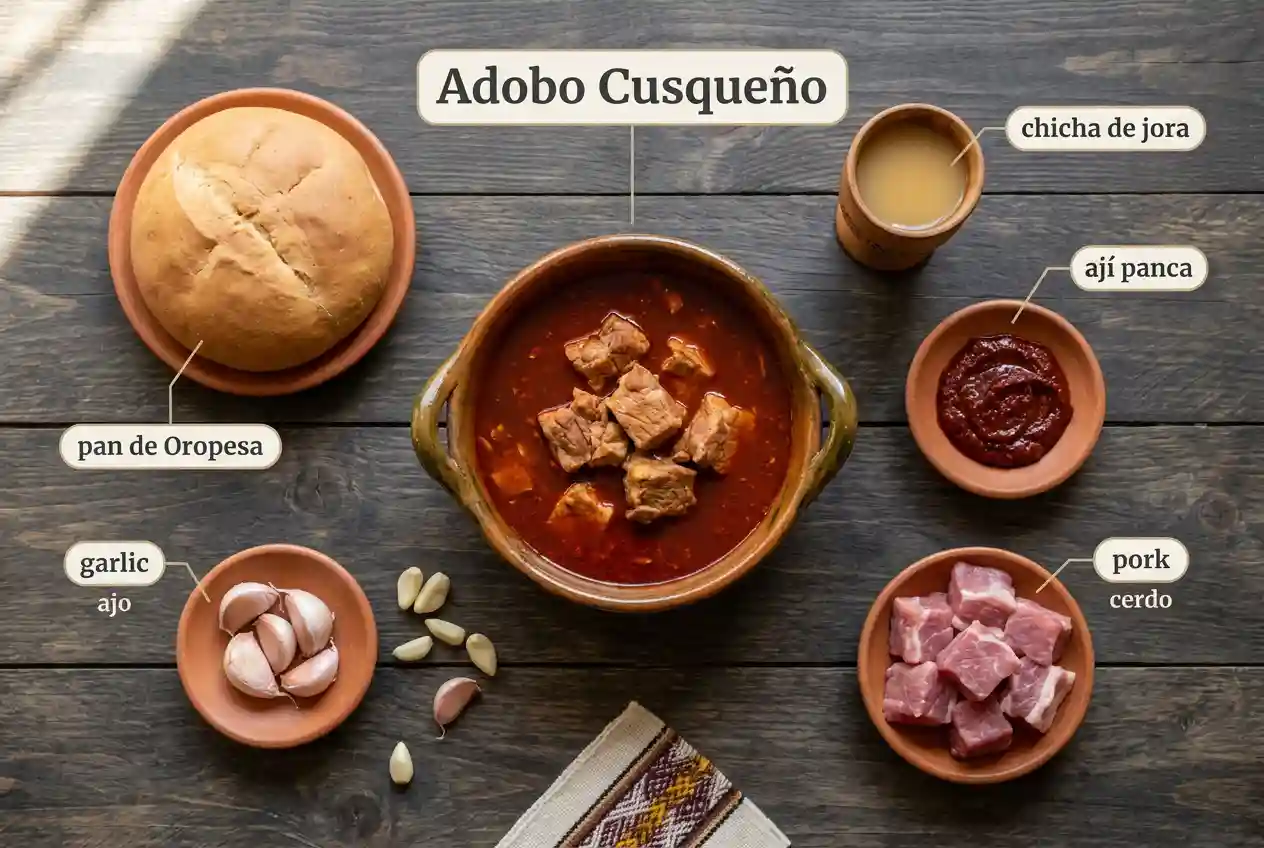
Pork marinated in chicha de jora, ají panca, and garlic, then simmered into a deep red broth. Locals eat it early on Sunday mornings with pan de Oropesa, a round bread from the town of the same name.
Chairo
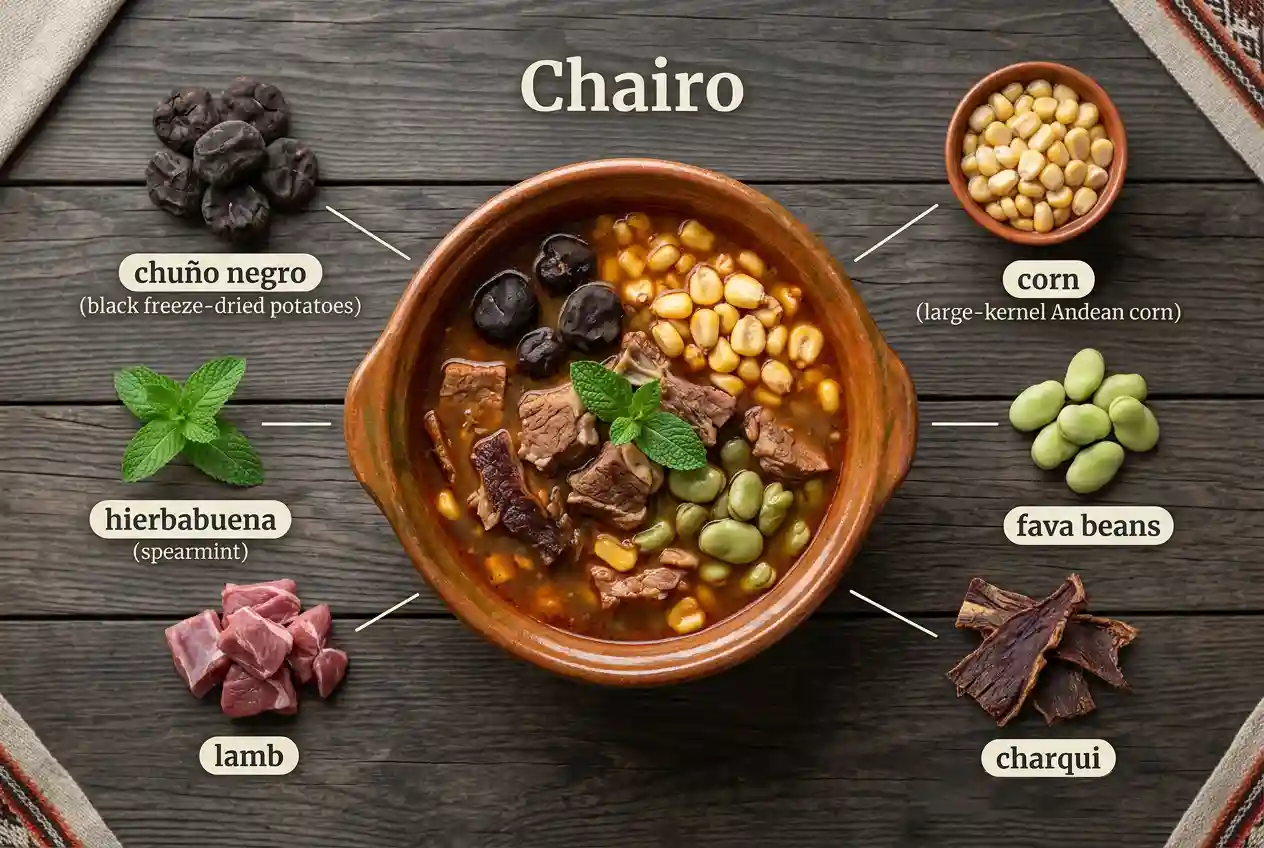
A dense highland soup of lamb, charqui, chuño negro, corn and fava beans, finished with hierbabuena. Built for cold days and long walks, it’s one of the best ways to taste chuño for the first time.
Kapchi de Setas or Kapchi de Habas
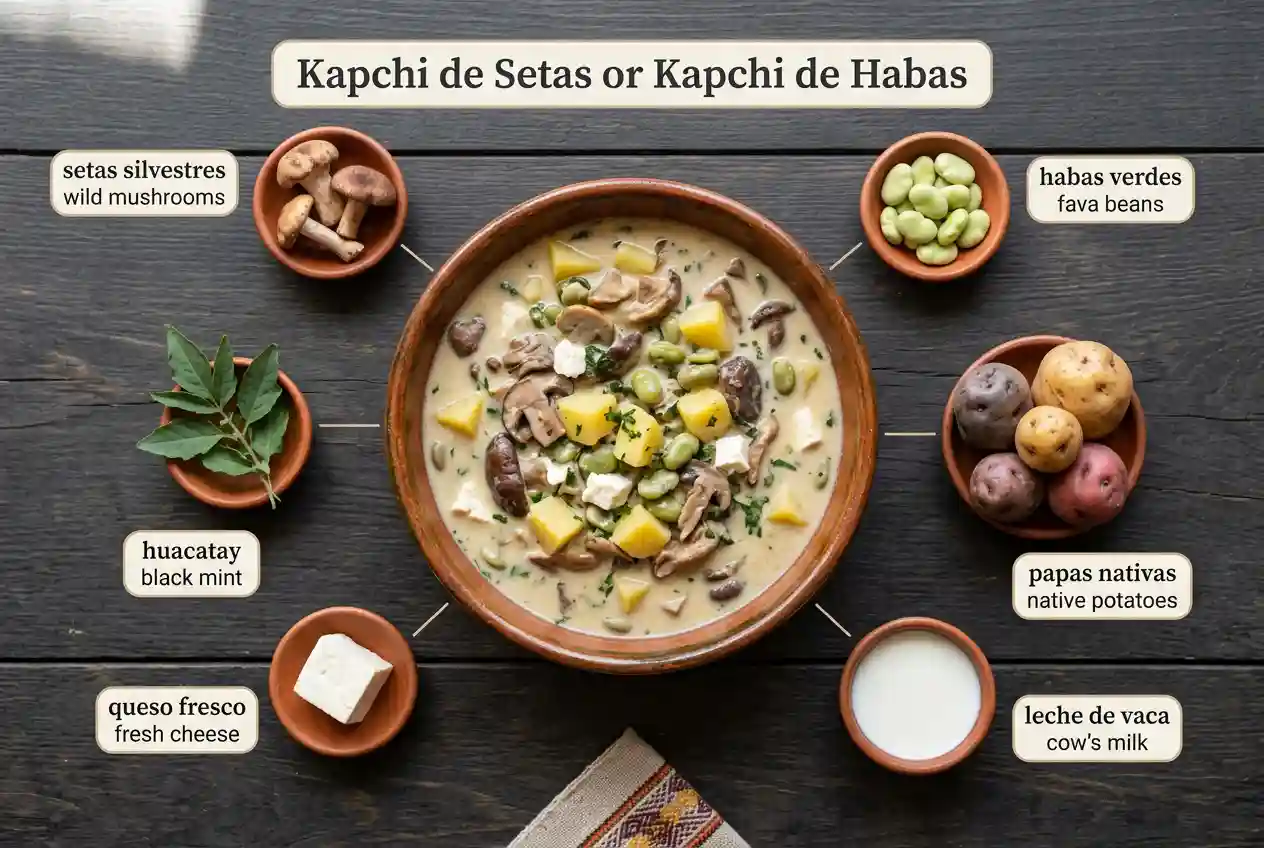
A creamy stew of wild mushrooms (picked in the rainy season) or fava beans with potatoes, milk, fresh cheese, and huacatay. It’s one of the few traditional dishes that is naturally vegetarian.
Chicharrón from Saylla
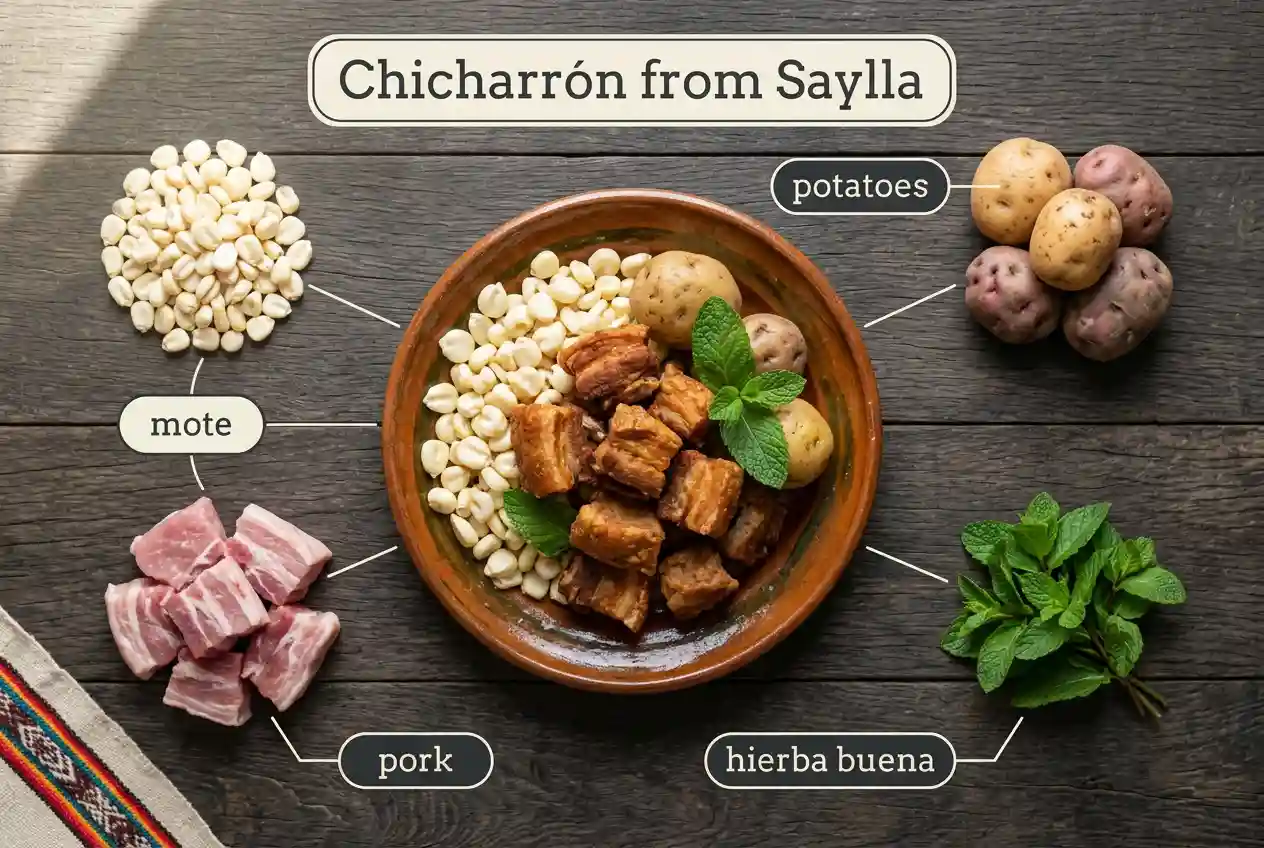
Fried pork (chicharron) served with mote (large-kernel corn), potatoes, and mint (hierba buena). The district of Saylla, located just south of Cusco, is widely renowned for it and hosts an annual Chicharron Festival.
Chicha de Jora
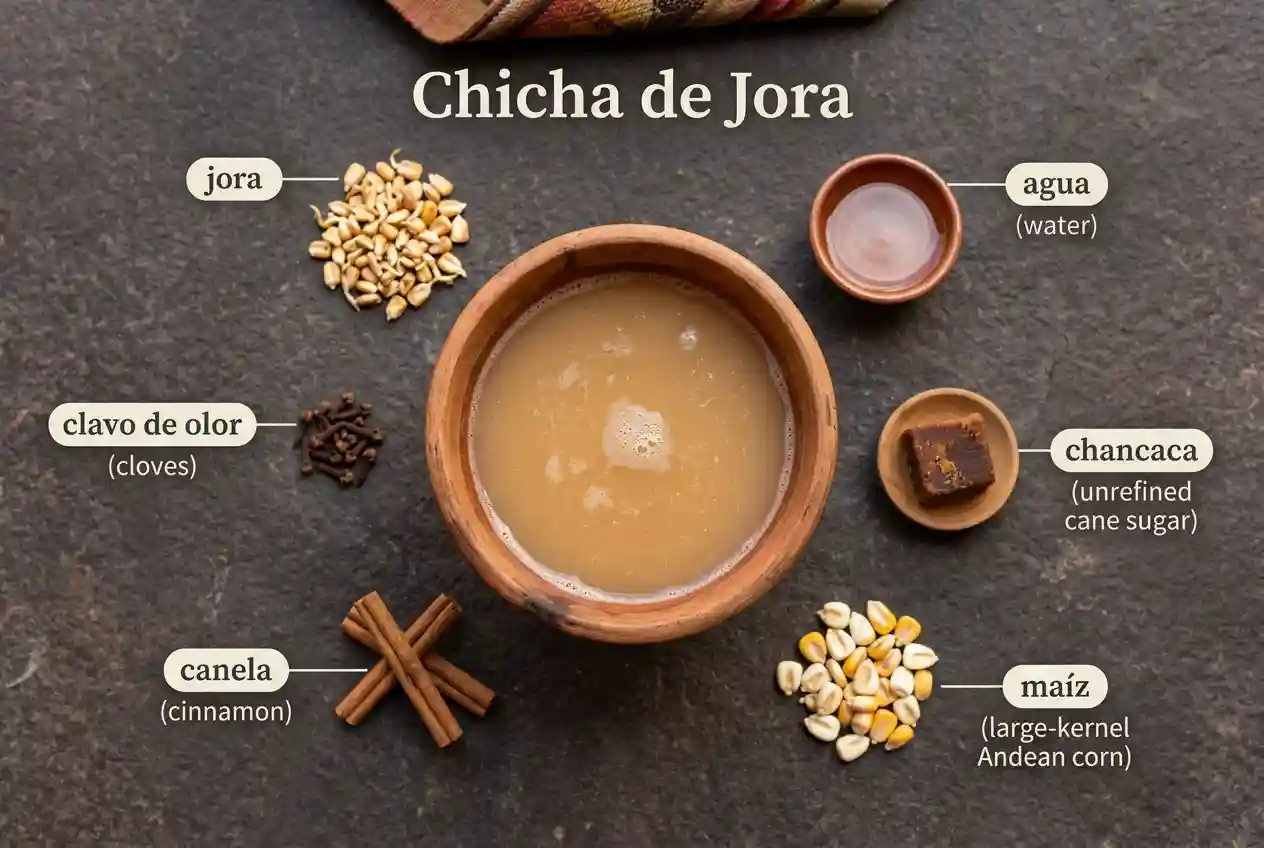
Illustration: the ingredients behind chicha de jora, Cusco’s fermented corn drink.
The fermented maize drink at the heart of Cusco’s chicherías. It’s mildly sour and lightly alcoholic, and it appears in marinades as often as in glasses. Chicha morada, the purple-corn soft drink, is a different thing entirely.
Where to Eat Cuy in Cusco
The most traditional cuy al horno is found in Tipón, on the southeastern outskirts of Cusco, where picanterías still roast it in wood-fired ovens. Tipón is also home to an Inca water-engineering site, so it pairs well with a half-day outing; a private driver makes the round trip simple.
Inside the city, look for quinta-style restaurants with wood-burning ovens. Pachapapa in San Blas is the best-known example: it roasts cuy in outdoor clay ovens and asks for about an hour’s notice. Frommer’s describes it as a refined take on a traditional quinta that also serves wood-fired pizza, which is a fair summary. It’s a comfortable first encounter with cuy rather than the most rustic one.
| Cuy al Horno (Cusco) | Cuy Chactado (Arequipa) | |
| Method | Stuffed with huacatay, slow-roasted in a wood-fired oven | Split, flattened under a river stone and fried |
| Texture | Plump, soft to crisp skin | Flat, paper-thin crackling skin |
| Served with | Rocoto relleno, baked pasta, potatoes | Rocoto relleno, native potatoes, cancha |
| Where to find it | Tipón, San Blas quintas | Mostly Arequipa and the southern highlands |
How to Tell Authentic Andean Cooking From a Tourist Adaptation
Researchers who study culinary tourism in Cusco describe a split between neighborhood cooking and what sociologist Dean MacCannell called «staged authenticity»: food adjusted to what visitors expect (see this 2024 tourism case study). Drawing on that research and regional food writing, we use five practical markers:
- The whole animal versus a carved portion. Traditional service presents cuy whole. A deboned or quartered cuy is a sign the dish has been adapted.
- Chuño and moraya versus fries and white rice. Freeze-dried potatoes bring earthy, slightly sour notes. Swapping them for fries is the most common adaptation.
- Chili in the dish versus chili on the side. Traditional kitchens build rocoto and ají into marinades. Tourist menus move the heat to a side sauce.
- Location. Traditional cooking thrives in markets and in towns like Tipón and Saylla. The theatrical versions cluster around the Plaza de Armas.
- The calendar. Festival dishes like chiri uchu belong to specific dates. Seeing them on a menu every day of the year signals a restaurant version.
None of this makes an adapted dish a bad meal. It simply means you know what you’re ordering, and you can choose the traditional version when that’s the experience you want.
Fine Dining in Cusco: Novoandina and the Best Restaurants for a Curated Night
What Novoandina Means on Your Plate
Cocina novoandina began in Peru in 1986 with culinary writer Bernardo Roca Rey and chef Cucho La Rosa. It takes Andean ingredients once dismissed as peasant food and applies fine-dining technique. In Cusco, that looks like quinoa cooked risotto-style, deboned cuy confit, alpaca treated like premium game, and muña (Andean mint) in sauces and cocktails.
A Reality Check on Awards
You’ll see «Michelin-star restaurants in Cusco» in plenty of travel articles. The MICHELIN Guide does not currently rate restaurants in Peru, so no Peruvian restaurant holds a star. Michelin does rate hotels: in 2025 it awarded Peruvian properties its hotel «Keys» for the first time, including two Keys for Inkaterra La Casona in Cusco. If a Cusco restaurant advertises a Michelin star, treat that as a red flag.
The ranking that does apply is The World’s 50 Best Restaurants. Lima’s Central was named the world’s best restaurant in 2023. Closer to Cusco, Mil ranked No. 49 on Latin America’s 50 Best Restaurants 2025. It sits at about 3,500 meters above the Moray terraces in the Sacred Valley and serves eight courses built on ingredients from different altitudes. It works best as the anchor of a Sacred Valley day, with private transport planned around it.
Curated Picks in Cusco City
These are the restaurants our team recommends to clients, grouped by the kind of meal you’re after.
Traditional Cusqueño and Peruvian cooking
- Pachapapa: Cusqueño cooking from wood-fired clay ovens in San Blas, and our pick for a first cuy al horno
- Chicha por Gastón Acurio: traditional Peruvian and regional dishes from the Cusco kitchen of Peru’s best-known chef.
- Morena Peruvian Kitchen: classic Peruvian dishes in a relaxed setting.
- Inka Grill: traditional Peruvian cooking.
Peru’s fusion traditions
Peruvian cuisine has absorbed immigrant cooking for well over a century. Two of those blends, Nikkei (Peruvian-Japanese) and chifa (Peruvian-Chinese), are now considered Peruvian food in their own right.
- Limo: Nikkei cooking, where Japanese technique meets Peruvian seafood and ají peppers.
- Kion: chifa, the Peruvian-Chinese cooking you’ll find in every Peruvian city, served here in a refined setting.
- Cicciolina: Peruvian ingredients through a French-influenced kitchen, such as cuy confit served on a potato causa.
For meat lovers
- Uchu: our recommendation for grilled meats, including alpaca.
For an evening away from Andean cooking:
- Bah Bah Persian Garden (197, Calle Carmen Alto, San Blas) opened in 2026 as Cusco’s first Persian restaurant, with a mostly vegetarian menu. Diners single out the Ash Reshteh, a herb, bean, and noodle soup, along with generous portions, good value on the set menu and a warm, friendly welcome.
Planning a milestone dinner around a Sacred Valley day or a Tipón outing? Our Cusco private tours are built around your pace, so a long lunch or a reservation at the end of the day is part of the plan rather than a rush.
San Pedro Market: What to Eat and How to Eat Safely
Mercado Central de San Pedro is Cusco’s main food hub and the best place to see what the city actually eats: soups, juices, tamales, fresh cheese and menús del día. National standards for food handling come from DIGESA, part of Peru’s Ministry of Health, and SENASA inspects raw agricultural products. Standards on paper don’t guarantee every stall, though, so these habits matter:
- Order dishes cooked hot and served straight from the pot or pan.
- Skip raw salads, market ceviche, and cold sauces left at room temperature.
- Ask for fruit juices without added tap water or ice, or buy whole fruit and peel it yourself.
- Choose busy stalls where local families are eating. High turnover means fresher food.
- Keep your first 24 to 48 hours light while you adjust to the altitude. Our altitude sickness guide explains why.
Is It Safe to Eat Traditional Food in Cusco?
Yes, with the same precautions that apply across Peru. The CDC’s Peru guidance advises travelers not to drink tap water, including in Cusco, and to avoid ice made from it. Water boils at a lower temperature at Cusco’s altitude, around 88 to 89°C, but the CDC notes that a rolling boil at any elevation is enough to make water safe.
One parasite is worth knowing by name. Cyclospora is endemic to Peru, spreads through contaminated produce and water, and can cause diarrhea that relapses for over a month if untreated. The simplest defense is the travel-medicine rule: cook it, peel it, or leave it. Raw fish dishes are best saved for reputable restaurants.
At altitude, stomach trouble and altitude sickness can feel alike, and dehydration makes both worse. Carry oral rehydration salts and speak with a travel clinic before your trip for advice specific to you.
What Does a Meal in Cusco Cost, and Should You Tip?
Prices vary widely by where you eat. These ranges are compiled from 2026 cost guides such as HowToPeru.
| Type of meal | Typical price (per person) | What you get |
| Market menú del día | S/ 6 to 20 (about US$1.50 to 5) | Soup, main course, and a drink at a market counter or picantería |
| Mid-range restaurant | S/ 40 to 80 per main (about US$10 to 22) | Tourist-oriented restaurants around the Plaza de Armas and San Blas |
| Fine dining | S/ 140 to 380+ (about US$37 to 100+) | Tasting menus or multi-course dinners, drinks extra |
Tipping works differently from the US. Peruvian law allows restaurants to add a service charge called the recargo al consumo, capped at 13% of the bill. Under Peru’s consumer protection code, the restaurant must disclose it before you order; if it didn’t, you aren’t obliged to pay it. When the charge appears on your bill, an extra tip is optional. When it doesn’t, leaving about 15% in a sit-down restaurant is customary. At market counters, rounding up is plenty.
Can Vegetarians Enjoy Traditional Cusco Food?
Andean cooking is heavily built on potatoes, corn, beans, and native grains like quinoa, making many traditional dishes naturally wheat-free. Options like kapchi, solterito (a corn, bean, and fresh cheese salad), and humitas are generally safe for gluten-free travelers. However, travelers must be careful with dishes like papa a la huancaína, as the creamy cheese sauce traditionally uses soda crackers or bread as a thickening agent.
Watch for hidden animal products. Quinoa soup and bean stews are often made with meat or chicken stock, lard appears in empanadas and tamales, and shredded charqui can turn up in potato stews. Ask «¿Tiene caldo de carne o de pollo?» (Does it have meat or chicken stock?) before you order. For a fully vegetarian meal outside Andean cooking, Bah Bah Persian Garden in San Blas builds most of its Persian menu without meat.
Frequently Asked Questions
What Traditional Foods Should I Try in Cusco?
Start with cuy al horno, adobo cusqueño, chairo, and kapchi, and try chiri uchu if you visit during Corpus Christi. Add chicharrón if you pass through Saylla, and chicha de jora at a picantería.
Where Can I Eat Authentic Cuy in Cusco?
Tipón, on the outskirts of the city, is the traditional choice for wood-fired cuy al horno. In the city, Pachapapa in San Blas roasts it in clay ovens; order about an hour ahead.
Is There a Michelin-Star Restaurant in Cusco?
No. The MICHELIN Guide does not rate restaurants in Peru. The region’s most recognized restaurant is Mil in Moray, No. 49 on Latin America’s 50 Best Restaurants 2025.
Is It Safe to Eat Street Food in Cusco?
It can be. Choose food cooked hot in front of you at busy stalls, and avoid raw produce, cold sauces and anything made with tap water or ice.
Should You Tip at Restaurants in Cusco?
If the bill includes the recargo al consumo (up to 13%), an extra tip is optional. If not, about 10% is customary in sit-down restaurants.
What Time Do People Eat Dinner in Cusco?
Lunch, usually between about 11 and 3 pm, is the main meal in Cusco. Dinner is lighter and typically starts from around 6 pm, though restaurants serving visitors open earlier.
How Much Should I Budget for Traditional Food in Cusco?
Plan on roughly US$1.50 to 5 for a market menú del día, US$10 to 22 per main in mid-range restaurants, and US$37 to 100 or more per person for fine dining.
Conclusion
Cusco’s food makes the most sense once you know where it comes from: centuries of cooking at altitude, festival tables and neighborhood picanterías recognized as national heritage. Taste the traditional dishes where they’re made, book one novoandina meal for a special night, and eat with the same care you’d bring to any high-altitude destination. Do that, and the meals become some of the most memorable parts of your trip, not an afterthought between tours.
Plan Your Cusco Journey With a Local Team
FindersPeru designs private, tailor-made journeys through Cusco, the Sacred Valley and Machu Picchu, with the pace, transport and local knowledge that leave room for a long lunch in Tipón or a tasting menu above Moray. Contact our team to start planning your trip, or read why private touring is worth it first.
