

Where to See Llamas and Alpacas in Cusco: Best Spots and Costs
You can see llamas in Cusco in three ways: free-roaming on the terraces of Machu Picchu, at community sanctuaries like Awanakancha in the Sacred Valley, or in the streets of central Cusco, where handlers charge a tip per photo. Each option has a different cost, a different pace, and a different level of interaction; this guide breaks down all of them so you can pick the right one.
Llama vs. Alpaca: How to Tell Them Apart
The easiest way to tell them apart: look at the ears. Llamas have long, curved ears people describe as «banana-shaped.» Alpacas have short, straight, pointed ones, often half-hidden under a shaggy forelock of wool.
| Feature | Llama | Alpaca |
| Height at shoulder | ~120 cm (47 in) | ~90 cm (35 in) |
| Weight | 113+ kg (250+ lbs) | 55–65 kg (121–143 lbs) |
| Ears | Long, curved | Short, straight |
| Face | Elongated | Blunt, wool-covered |
| Back shape | Squarish | Rounded |
| Tail | Often held erect | Pressed close to body |
| Coat | Coarser outer coat | Fine, prized fleece |
| Traditional role | Pack animal — can carry ~45–60 kg (99–132 lbs) up to 30 km (18.6 mi) a day | Bred for wool |
| Temperament | Independent, sometimes protective | Shy, herd-oriented |
(Source: Britannica — What’s the Difference Between Llamas and Alpacas?)
Both are domesticated: llamas descend from the wild guanaco, alpacas from the vicuña. All four species — llama, alpaca, guanaco, vicuña — can interbreed.
Where to See Llamas Near Cusco
1. Cusco City Center (Free, but not free)
You’ll find handlers with llamas and alpacas near the Plaza de Armas, on Hatun Rumiyoc Street (site of the 12-angled stone), and along Plateros Street. No entry fee, but the animals belong to individuals who expect a tip — usually a few soles — for every photo. It’s convenient and it’s real Cusco street life, but it’s also the most transactional way to see these animals, and the encounters are brief.
- Distance: In the historic center, no travel needed
- Cost: Free to walk by; a tip (~5–10 PEN) expected per photo
- Hours: Daylight hours, informal
- Independent access: Yes, no booking needed
2. Sacsaywaman (Free-Roaming, 15 Minutes from Cusco)
Llamas and alpacas graze freely across this Inca archaeological park immediately above the city. Unlike the street handlers, these are working the site’s own grounds rather than posing for tips — a calmer way to see them without leaving Cusco.
- Distance: ~2 km / 10–15 min by taxi (30–40 min walking uphill from Plaza de Armas)
- Cost: Covered by the Boleto Turístico — Partial Circuit I ticket (S/70, ~$19 USD) or Full Ticket (S/130, ~$35 USD, valid 10 days / 16 sites)
- Hours: Daily, 7:00 AM – 5:30 PM
- Independent access: Yes, walk up or taxi, no tour required
3. Sanctuary of Camelids — Sacred Valley Sanctuary (Free Entry)
This is a favorite stop on most Sacred Valley itineraries. The Sanctuary of Camelids is a community-run center en route to Pisac where you can see all four South American camelids — llama, alpaca, vicuña, and guanaco — side by side, and feed and photograph them up close. Entry is free; a small donation or a purchase from the on-site artisan shop supports the animals and the local weaving families.
- Distance: ~23 km / 30–40 min drive from Cusco toward Pisac
- Cost: Free entry; donation of ~10–15 PEN (~$3–5 USD) encouraged
- Hours: Daily, 8:00 AM – 5:00 PM
- Independent access: Yes, no tour needed — but it’s easiest as a stop on a Sacred Valley day
- Interaction: Feeding and photos, not walking/trekking — if you want to lead a llama on a rope, that’s a separate trekking tour
4. Chinchero (Weaving + Llamas Combined)
Chinchero, about 1.5 hours from Cusco on the way to the Sacred Valley, pairs llama and alpaca sightings with the region’s textile tradition. Local weaving cooperatives keep animals on site and demonstrate the full process — shearing, spinning, natural dyeing — using techniques passed down for generations. If you want to understand why the wool matters as much as the animal, this is the stop.
- Distance: ~1 to 1.5 hours from Cusco
- Cost: Weaving demonstrations often request a small community fee (S/20–50) or expect purchases
- Hours: Daylight hours; weaving centers typically open through late afternoon
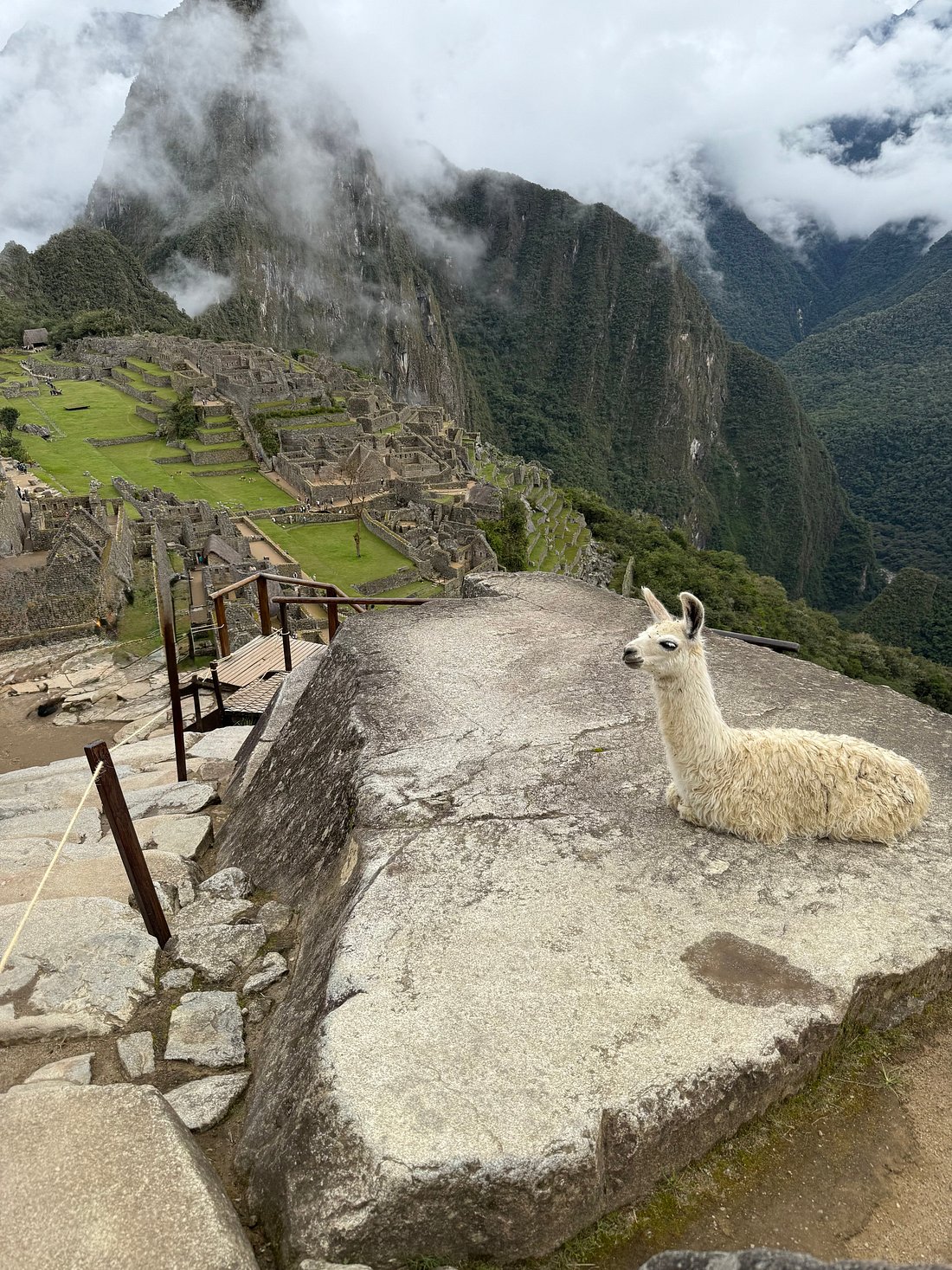
5. Machu Picchu‘s Resident Llamas
The llamas at Machu Picchu aren’t there for tourists — they graze the agricultural terraces year-round and effectively keep the grass down across the citadel. Seeing them navigate 500-year-old stonework, unbothered by the crowds, is one of the more striking small moments of the visit.
- Distance: ~73 km direct, but 3.5–5 hours of actual travel each way (drive to Ollantaytambo, train to Aguas Calientes, shuttle bus up)
- Cost: Entry ticket ~152 PEN (~$40 USD), booked in advance by Circuit
- Hours: Daily, 6:00 AM – 5:30 PM (last entry ~3:00 PM)
- Independent access: Yes, with a pre-purchased ticket and passport; hiring a guide at the entrance is recommended but not required
Best pairing: Awanakancha + Chinchero + Pisac make a natural Sacred Valley day. Sacsaywaman fits a half-day Cusco city circuit. Machu Picchu is its own full-day (or overnight) trip.
Why Llamas Spit — And Whether You Should Worry
Spitting is communication, not aggression by default. Llamas spit to defend personal space, sort out herd hierarchy, or signal they’re overloaded or stressed. What’s actually being launched isn’t saliva — it’s regurgitated stomach contents, and a llama can send it up to 33 feet (10 meters) (Britannica).
In practice: llamas rarely spit at people, and it’s almost always a response to being crowded or grabbed. Keep a respectful distance, let the animal approach you rather than the reverse, and you’re very unlikely to see it happen.
Why Llamas Matter Beyond the Photo
For roughly 150,000 families living above 3,800 meters in the Peruvian highlands, camelids aren’t scenery — they’re the primary livelihood. Peru holds the world’s largest genetic reserve of these species: about 4.5 million alpacas and 1 million llamas, plus close to 350,000 protected vicuñas, whose fiber is among the finest in the world. Over 4,600 tons of alpaca fiber are exported annually to international fashion markets. (Source: MIDAGRI — IX World Congress on South American Camelids)
When you buy alpaca wool, look for the SERFOR-licensed «Marca Vicuña Perú» seal — it confirms the fiber was sourced through community-led, sustainable conservation (chaccu) rather than mass production, and that the money reaches the families who raised it.
Why Travelers Work With Local Guides Instead of Going Solo
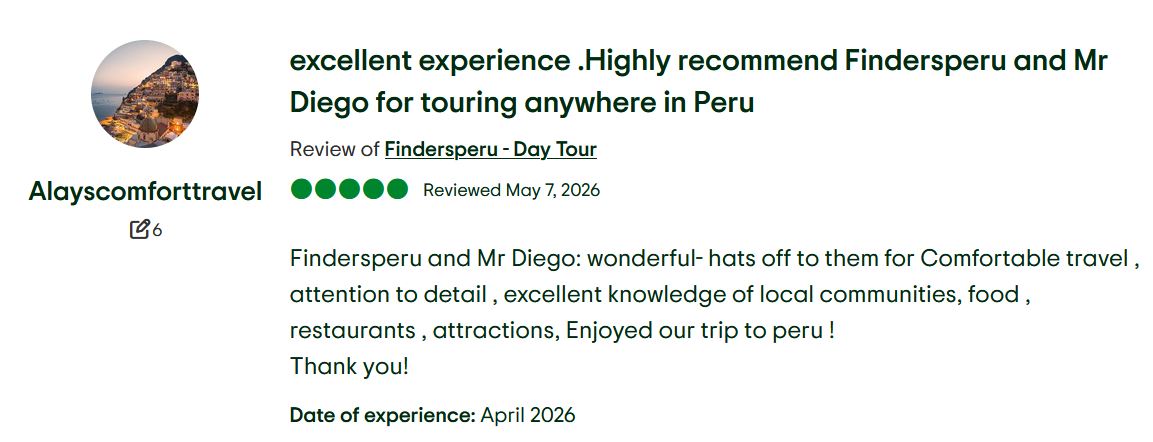
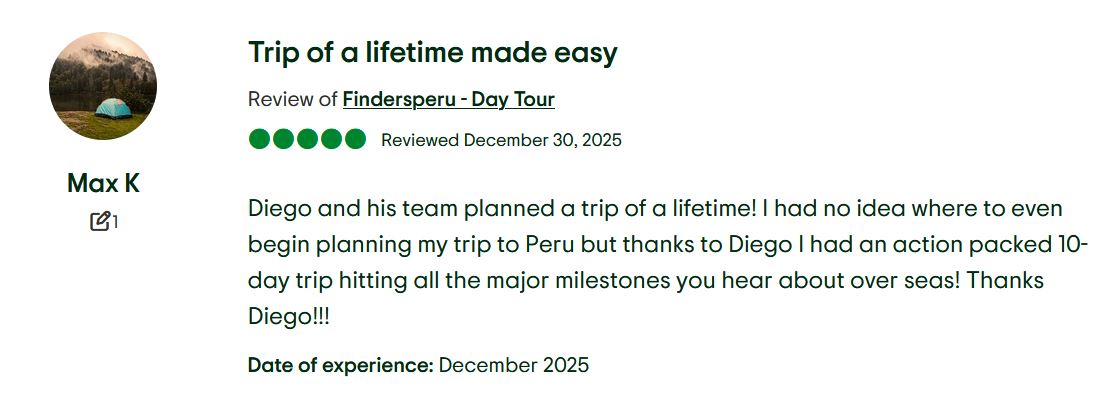
Every location above is reachable independently. What a private guide actually buys you is pace and context — not rushing past Sacsaywaman because a bus is waiting, or knowing which Awanakancha weaver will actually explain the dyeing process instead of just selling you a scarf.
That’s consistently what comes up in FindersPeru’s TripAdvisor reviews — not specific animal encounters, but the flexibility and local knowledge:

(Reviews via TripAdvisor)
Practical Trip Info: Magic Cusco & Machu Picchu Sunrise (4D/3N)
If you want Sacred Valley sites and Machu Picchu covered in one trip, this is the package to ask about — and it’s easy to add an Awanakancha stop to the Sacred Valley day.
- Price: $450–$650 USD per person (double occupancy, 3-star hotels); $750–$1,200+ USD for 4-star/luxury upgrades; +$60 USD for Vistadome train upgrade
- Duration: 4 days / 3 nights (2 nights Cusco, 1 night Aguas Calientes)
- Includes: Airport transfers, Cusco City Tour (Cathedral, Qorikancha, Sacsaywaman, Q’enqo, Puka Pukara, Tambomachay), Sacred Valley Tour (Pisac, Urubamba, Ollantaytambo), round-trip Expedition train, Machu Picchu entry, bilingual guide, 24/7 on-site support
- Not included: International/domestic flights, meals (~$10–20 USD/meal), gratuities, Vistadome upgrade, travel insurance
FAQ
Can you see llamas at Machu Picchu? Yes. A resident herd grazes the citadel’s agricultural terraces year-round.
Do you have to pay to take a photo with a llama in Cusco? In the city center and at sites like Sacsaywaman, handlers who bring their own animals expect a tip — a few soles per photo is standard. At Awanakancha, entry and photos are free; a small donation is appreciated.
Can you touch or feed llamas and alpacas in Cusco? At Awanakancha, yes — feeding is part of the visit. At Sacsaywaman or Machu Picchu, keep your distance and don’t touch without a guide’s go-ahead; these are free-roaming animals, not petting-zoo animals.
Can you walk a llama on a leash in Cusco? Not at the standard sanctuary stops covered here (Awanakancha, Chinchero) — those are feed-and-photograph experiences. Hands-on trekking where you lead a llama by rope is a separate, specific type of tour offered in a few Sacred Valley communities; ask if that’s specifically what you want, since it’s not included in a standard Sacred Valley day.
Is it safe to bring kids to see llamas and alpacas? Yes, particularly at Awanakancha — it’s built for casual, close-up visits and the animals are used to people. Use normal caution at free-roaming sites like Sacsaywaman.
Do alpacas spit at people? Rarely, and less often than llamas. Alpacas mostly reserve spitting for sorting out hierarchy with each other.
How much does an authentic alpaca sweater cost in Cusco? Price depends on fiber grade — «Baby Alpaca» is common and mid-range; «Royal Alpaca» or genuine vicuña fiber costs significantly more. Buy from certified communities like Chinchero, or look for the «Marca Vicuña Perú» seal, to make sure you’re getting real fiber and the money reaches local artisans.
What’s the best time of day to photograph llamas without crowds? Early morning, before tour buses and trains fill up the sites — especially true at Machu Picchu, where the citadel is far quieter before mid-morning arrivals.
Plan Your Visit
Awanakancha, Chinchero, and Sacsaywaman all fit naturally into a private Sacred Valley or Cusco city day — no rushed group-tour timing, no missing the moment because the bus has to leave. Ask about adding an Awanakancha or Chinchero stop to your Sacred Valley itinerary, or explore the Magic Cusco & Machu Picchu Sunrise Program to cover both the city sites and the citadel in one trip.
